Evening Darshan Guide
Evening darshan at Pashupatinath reopens at 5:00 PM after the temple’s midday closure and builds toward its most visually striking moment of the day: the Sandhya Aarti inside the sanctum and the simultaneous Bagmati Ganga Aarti performed on the riverbank, roughly 6:00–7:00/7:30 PM, when lamplight, chanting, and the sound of the river combine into one of Pashupatinath’s most memorable devotional experiences.
Where morning darshan offers quiet, contemplative intimacy, evening darshan offers atmosphere and scale — larger crowds, a livelier courtyard, and a dual ceremony spanning both the temple and the water beside it. This guide walks through exactly what happens during the evening window and how to plan a visit around it.
This entry is part of our Darshan Guide. For the complete darshan process and entry rules, see our companion entry, the Complete Pashupatinath Darshan Guide; for how evening timing fits the full daily and weekly rhythm, see the Darshan Timing Guide; for the quieter counterpart to this window, see our Morning Darshan Guide.

Quick Answer
| Evening darshan window | Approximately 5:00 PM – 9:00 PM |
|---|---|
| Inner sanctum darshan hours | Roughly 5:00 PM – 7:00/7:30 PM |
| Sandhya Aarti (inside the temple) | Around 6:00–7:00 PM |
| Bagmati Ganga Aarti (riverbank) | Around 6:00–7:30 PM, performed simultaneously |
| Complex closes | 9:00 PM |
| Best moment for the fullest experience | Arriving by 5:30–5:45 PM, ahead of the 6:00 PM aarti start |
| Typical crowd level | Generally busier and more animated than the pre-dawn Mangala Aarti window |
Why Evening Darshan Feels Different from Morning
Pashupatinath’s two main darshan windows are separated by more than just the clock — they carry genuinely different atmospheres, rooted in what each ceremony is built around. Morning darshan, centered on the pre-dawn Mangala Aarti, is a ceremony of beginning: quiet, still, and comparatively sparsely attended. Evening darshan, by contrast, is built around closure and gratitude — the day’s final major act of worship, performed as dusk settles over the temple and the Bagmati River. This is reflected in the ceremony’s structure itself: unlike the morning, where worship happens solely within the temple courtyard, the evening brings a second, simultaneous ceremony performed outdoors on the riverbank, drawing many visitors who might not otherwise queue for sanctum darshan specifically, and generally producing a larger, more socially animated crowd throughout the courtyard and ghats alike.
The Evening Darshan Timeline, Step by Step
5:00 PM — The Sanctum Reopens
Following the midday closure discussed in our Darshan Timing Guide, priests reopen the inner sanctum for evening darshan at 5:00 PM. The courtyard, quiet during the afternoon closure, begins filling steadily as the temple resumes public darshan.
5:00–6:00 PM — Evening Darshan Builds
This hour offers a comparatively calmer window than what follows, as devotees arrive ahead of the main evening ceremony. Visitors specifically hoping to view the sanctum with a shorter wait, without the full crowd drawn by the aarti itself, often target this earlier portion of the evening window.
6:00–7:00 PM — Sandhya Aarti
The Sandhya Aarti is Pashupatinath’s main evening worship ceremony, performed inside the temple with lit lamps, bells, and chanting, echoing the structure of the morning’s Mangala Aarti but drawing a considerably larger crowd, given the more convenient early-evening hour. This is generally considered the ritual centerpiece of the evening visit for devotees focused specifically on the inner sanctum.
6:00–7:30 PM — Bagmati Ganga Aarti
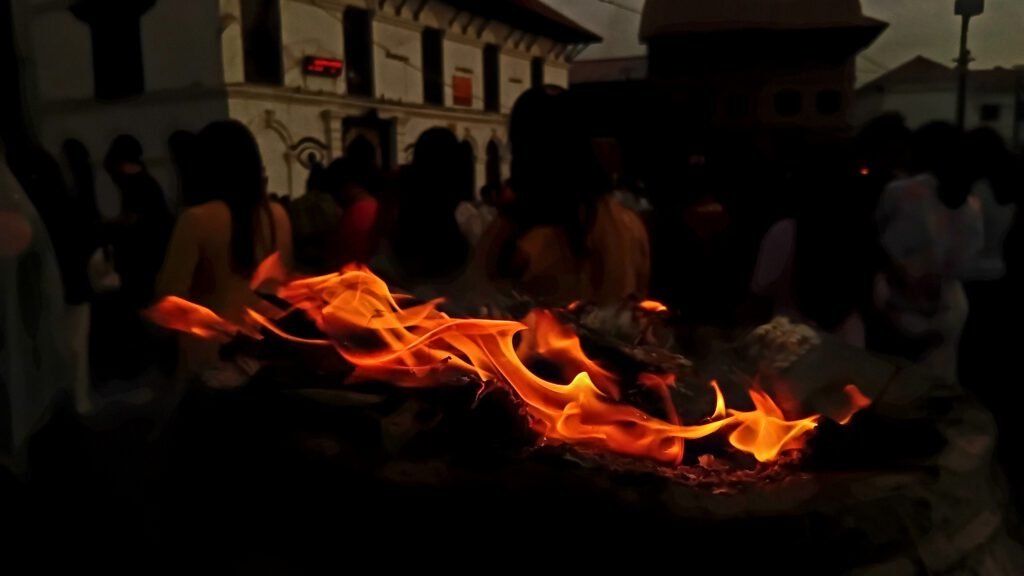
Simultaneously, on the riverbank beside the temple, priests perform the Bagmati Ganga Aarti, a ceremony honoring the sacred river itself, distinct from but timed alongside the Sandhya Aarti happening inside the sanctum. This riverside ceremony is generally the most visually dramatic single moment available to visitors at Pashupatinath — rows of lit lamps, coordinated priestly movements, and chanting performed facing the water, often compared by visitors to the more famous Ganga Aarti held nightly at Varanasi and Rishikesh in India, though on a notably smaller, more intimate scale. Unlike sanctum darshan, the riverside Ganga Aarti is generally viewable by all visitors, including non-Hindus, from the ghats and surrounding viewing areas.
7:00/7:30 PM — Sanctum Closes
Inner sanctum darshan generally concludes around 7:00 to 7:30 PM, depending on the specific day and crowd conditions, though the riverside aarti may continue slightly beyond this point.
7:30–9:00 PM — Complex Winds Down
The broader complex remains open until 9:00 PM, allowing visitors time to explore the ghats, cross to the eastern bank, or simply linger in the cooling evening air before the full closure.
What Makes the Bagmati Ganga Aarti Distinctive
For many visitors — particularly non-Hindu tourists who cannot enter the inner sanctum — the Bagmati Ganga Aarti is the single most accessible and memorable ritual experience available at Pashupatinath, precisely because it takes place in an open, publicly viewable riverside setting rather than a restricted courtyard. The ceremony typically involves a coordinated sequence of priests holding large, multi-tiered oil lamps, moving them in synchronized circular patterns facing the Bagmati River, accompanied by devotional chanting and, at many performances, recorded or live musical accompaniment. Combined with the darkening sky, the temple’s illuminated golden roof visible across the water, and the steady murmur of the crowd gathered along the ghats, this ceremony offers a genuinely striking sensory experience distinct from anything available earlier in the day.
Crowd Dynamics: What to Expect
Evening darshan at Pashupatinath is, on balance, busier than the pre-dawn window described in our Morning Darshan Guide, for a few compounding reasons: the 5:00–7:30 PM window is simply a more convenient hour for the majority of both local devotees and international visitors than a 4:00 AM start, and the added draw of the publicly viewable riverside aarti brings a broader mix of pilgrims, tourists, and casual visitors than the sanctum-focused morning ceremony. Visitors specifically prioritizing a quieter, more contemplative experience should generally lean toward the Morning Darshan Guide‘s recommendations instead; those prioritizing atmosphere, visual spectacle, and a livelier, more communal evening should find the trade-off well worth it.
As with all Pashupatinath crowd patterns, evening darshan intensifies further on Mondays (Somvar), during Ekadashi, and dramatically during major festivals — details covered fully in our Darshan Timing Guide.
Practical Advice for Attending Evening Darshan
A few points worth planning around for a smooth evening visit:
- Arrive by 5:30–5:45 PM to secure a reasonable vantage point before the 6:00 PM aarti begins, particularly for the riverside Ganga Aarti, where good sightlines fill quickly.
- Bring a light layer. Evening temperatures along the river can turn cool after sunset, particularly outside the warmer months.
- Plan onward transport before dark, since navigating unfamiliar taxi or rideshare arrangements after 9:00 PM closure is less convenient than during daylight hours.
- Combine with a Guhyeshwari or Gorakhnath visit beforehand, since the eastern bank remains accessible throughout the afternoon and evening, allowing visitors to explore before settling in for the aarti itself. See our Temple Map for a full route.
- Expect limited photography inside the sanctum, though the riverside Ganga Aarti is generally more permissive for outdoor photography than the restricted inner courtyard — always follow posted signage and staff guidance, which can vary.
Evening Darshan During Festivals
Pashupatinath’s evening ceremonies take on considerably greater scale during major festival dates. During Maha Shivaratri, the entire complex remains active well into the night, with continuous worship extending far beyond the standard 9:00 PM closure on this specific date, and the riverside aarti drawing especially large crowds alongside the day’s already massive pilgrim volume. During Teej, evening darshan sees a notable increase in attendance as well, reflecting the festival’s broader daylong observance. Visitors specifically seeking the festival atmosphere should expect evening darshan to be considerably more crowded, but also considerably more spiritually charged, than an ordinary day — see our Darshan Timing Guide for the full festival calendar.
Morning vs. Evening: A Quick Comparison
| Morning Darshan | Evening Darshan | |
|---|---|---|
| Peak ceremony | Mangala Aarti (~4:30–5:00 AM) | Sandhya Aarti & Bagmati Ganga Aarti (~6:00–7:30 PM) |
| Typical crowd | Smallest of the day | Larger, more animated |
| Atmosphere | Quiet, contemplative | Visually dramatic, communal |
| Accessibility for non-Hindus | Outer complex only | Outer complex and fully viewable riverside aarti |
| Arrival recommendation | 4:00–4:15 AM | 5:30–5:45 PM |
Many repeat visitors ultimately choose to experience both windows across a multi-day stay, given how different the two genuinely feel.
How the Evening Experience Changes by Season
As with morning darshan, the clock-time schedule for evening worship remains fixed year-round, but the experience of watching lamplight against a darkening sky shifts meaningfully across the calendar:
- October through December brings clear evening skies and comfortable temperatures, generally regarded as an ideal season for evening darshan, with good visibility for the riverside aarti as dusk settles.
- December through February brings noticeably cooler evenings; visitors should dress warmly, particularly for extended time along the open riverbank.
- March, coinciding with Maha Shivaratri in most years, transforms the evening entirely, with continuous worship extending well past the ordinary 9:00 PM closure and crowds far exceeding a typical day.
- April through May offers pleasantly warm evenings, making the post-sunset hours a comfortable time to be outdoors along the ghats.
- June through September, Nepal’s monsoon season, brings a real chance of evening rainfall; visitors should check forecasts and be prepared for limited shelter along the open riverside viewing areas during the Ganga Aarti specifically.
For broader seasonal trip planning, see our Travel Guide.
Frequently Asked Questions
What time does evening darshan start at Pashupatinath?
The inner sanctum reopens at 5:00 PM following the midday closure, with the main Sandhya Aarti beginning around 6:00 PM.
What is the Bagmati Ganga Aarti?
A riverside lamp ceremony performed simultaneously with the Sandhya Aarti, honoring the sacred Bagmati River, generally viewable by all visitors including non-Hindus, and widely regarded as the most visually striking single moment of a Pashupatinath visit.
Is evening darshan more crowded than morning darshan?
Generally, yes. The convenient early-evening hour and the publicly accessible riverside aarti draw a larger, more varied crowd than the pre-dawn Mangala Aarti.
Can non-Hindus watch the evening aarti?
Non-Hindus cannot enter the inner sanctum but can freely view the Bagmati Ganga Aarti from the riverbank and surrounding ghats, making it one of the most accessible ritual experiences at Pashupatinath for all visitors.
What time does the temple fully close in the evening?
The complex closes at 9:00 PM, though inner sanctum darshan generally concludes earlier, around 7:00 to 7:30 PM.
Should I visit in the morning or evening?
Choose morning for a quieter, more contemplative experience; choose evening for a livelier atmosphere and the visually dramatic riverside Ganga Aarti. Many visitors experience both across a longer stay.
For more direct answers, see our full FAQ section.
Where to Go Next
- Complete Pashupatinath Darshan Guide — the full standard darshan process, entry rules, and daily schedule
- Darshan Timing Guide — how evening darshan fits within the temple’s complete daily, weekly, and festival calendar
- Morning Darshan Guide — the quieter, pre-dawn counterpart to this window
- VIP Darshan Guide — special access options beyond standard evening darshan
- Temple Map — planning a combined visit to Guhyeshwari and Gorakhnath before the evening aarti
- Photography and Dress Code — visitor conduct guidance
- Travel Guide and Taxi Guide — arranging evening transport
This entry is part of our Darshan Guide, covering practical, ritual, and spiritual guidance for visiting Pashupatinath Temple.
The Pashupatinath is an independent devotional and cultural resource. It is not the official website of the Pashupati Area Development Trust (PADT) or the Government of Nepal. For official temple notices, consult PADT directly.